
Would you eat a cookie that had been made from plastic?
Polls
1st September 2026
1st September 2026
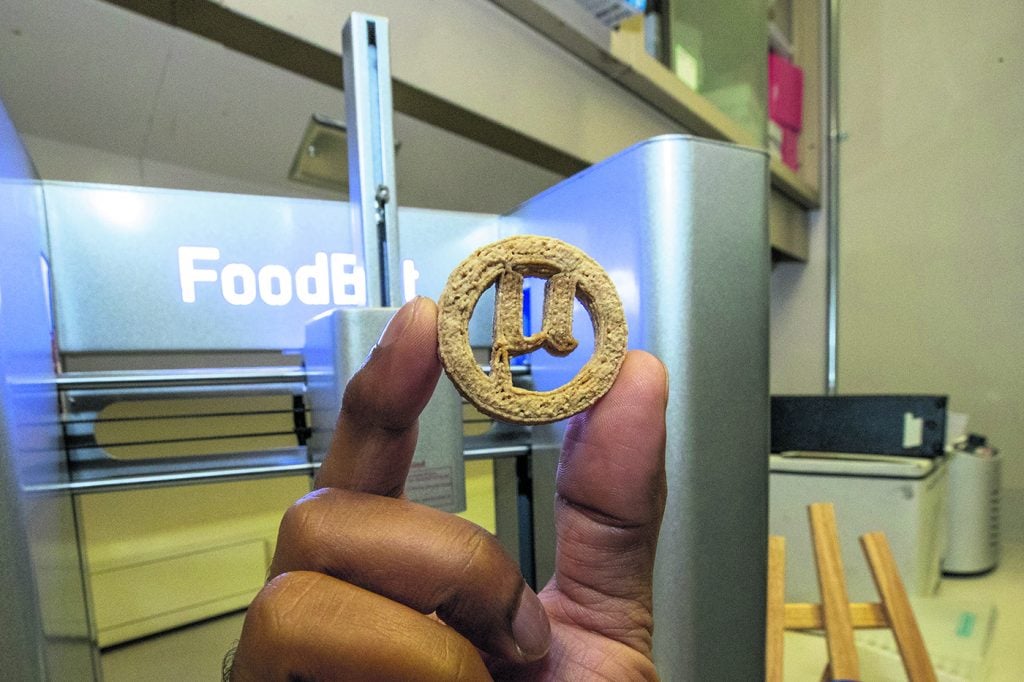
Okay, we know that doesn’t sound too appealing, but scientists in the US have figured out a way to turn plastic waste and unused bits of crops into edible biscuits.
The work was carried out as part of a NASA project looking at how to make food in deep space, where resources are limited. “We were trying to develop technologies for plastic upcycling to make more valuable products,” says Associate Professor Lahiru Jayakody from Southern Illinois University Carbondale. “We thought, why not focus on making food? Because plastic is carbon and food is carbon.”
What he means is that plastics are basically long chains of carbon atoms combined with other elements, such as hydrogen, oxygen and nitrogen. That’s also kind of what proteins, fats and carbohydrates are, so the team wanted to break down plastic into its building blocks, then use those blocks to make food.
Instead of using chemicals to break the plastic down, Jayakody’s team has been using various species of a microbe (microscopic living thing) called yeast, which the scientists can alter, or ‘reprogram’, to feed on things they wouldn’t normally touch.
The scientists start with PET, the plastic that’s used to make drinks bottles, as well as corn stalks, leaves and other bits of crops that don’t get used. They then blast this mixture with water and oxygen at high temperature, in a process called ‘oxidative hydrothermal dissolution’.
This breaks everything down into a form that can be used to feed the different yeasts. The yeasts then turn it all into food ingredients, such as proteins, fats and acids.
The researchers next add in some fibre, starch and sweetener, and use a 3D printer to create protein-rich cookies that they call µBites, which is pronounced microbites.
That’s the one thing we don’t know yet, as the team have to get approval from senior leaders at the university before they’re allowed to carry out any taste tests. However, they claim that all of their data shows that the cookies are perfectly safe to eat.
1 Comment
dosame · 2 months ago
Maybe because it is food and in space there is limited resources.